
Frequently Asked Questions
About KYZATREX®
KYZATREX is designed to simplify testosterone replacement therapy. Explore answers to common clinical questions to better support your patients and optimize treatment decisions.
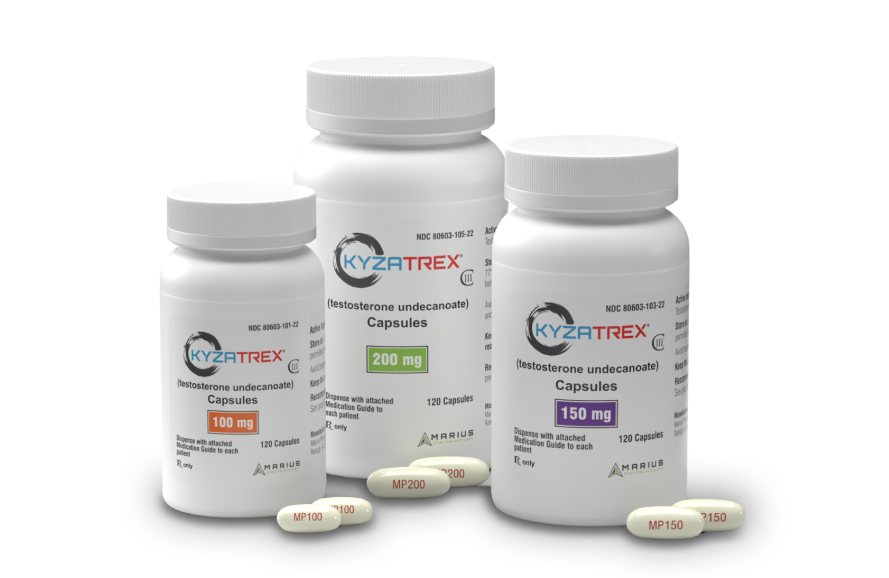
KYZATREX is an FDA-approved oral testosterone for men who have low or no testosterone levels due to certain medical conditions.
KYZATREX is a controlled substance (CIII) because it contains testosterone. It is not known if KYZATREX is safe or effective in males younger than 18 years old. Improper use may affect bone growth in children. KYZATREX is not meant for use by women.
KYZATREX is an oral formulation of testosterone undecanoate (TU) that utilizes lymphatic absorption to bypass first-pass metabolism and drive uptake. With the use of phytosterols as GRAS excipients to drive absorption, KYZATREX was designed for clinical efficacy and safety.¹
KYZATREX (testosterone undecanoate) capsules, CIII, is indicated for testosterone replacement therapy in adult males for conditions associated with a deficiency or absence of endogenous testosterone:
- Primary hypogonadism (congenital or acquired): testicular failure due to conditions such as cryptorchidism, bilateral torsion, orchitis, vanishing testis syndrome, orchiectomy, Klinefelter syndrome, chemotherapy, or toxic damage from alcohol or heavy metals. These men usually have low serum testosterone concentrations and gonadotropins (follicle-stimulating hormone (FSH), luteinizing hormone (LH)) above the normal range.
- Hypogonadotropic hypogonadism (congenital or acquired): gonadotropin or luteinizing hormone-releasing hormone (LHRH) deficiency, pituitary-hypothalamic injury from tumors, trauma, or radiation. These men have low serum testosterone concentrations but have gonadotropins in the normal or low range.
Limitations of Use
Safety and efficacy of KYZATREX® in males less than 18 years old have not been established.
Safety and efficacy of KYZATREX® in men with “age-related hypogonadism” (also referred to as “late-onset hypogonadism”) have not been established.
Please refer to the Important Safety Information below for warnings and precautions, drug interactions, use in special populations, and common side effects.
Contraindictions
KYZATREX is contraindicated in patients with carcinoma of the breast or known or suspected carcinoma of the prostate; women who are pregnant (testosterone may cause fetal harm); and patients with known hypersensitivity to KYZATREX or any of its ingredients.
Adverse Events
The most common adverse reaction of KYZATREX (incidence ≥ 2%) is hypertension (2.6%).
The recommended starting dose is 200 mg twice daily – once in the morning and once in the evening (400 mg total daily dose). Dosing may be adjusted depending on how your patient responds to KYZATREX. The minimum recommended dose is 100 mg once daily in the morning. The maximum recommended dose is 400 mg twice daily. For total daily doses greater than 100 mg, administer the same dose in the morning and evening.
Check serum testosterone concentration at least 7 days after starting treatment or after dosage adjustment, 3 to 5 hours after the morning dose. Periodically monitor serum testosterone concentration.
There are three ways to prescribe KYZATREX. You can send the Rx to select specialty mail-order pharmacies, you can utilize UroGPO to offer in-office dispensing, or you can opt for the bill clinic model.
Our sales representatives are on standby to answer any additional questions you may have and assist you in integrating KYZATREX into your practice.
References:
- KYZATREX® [prescribing information]. Raleigh, NC: Marius Pharmaceuticals; 2025.